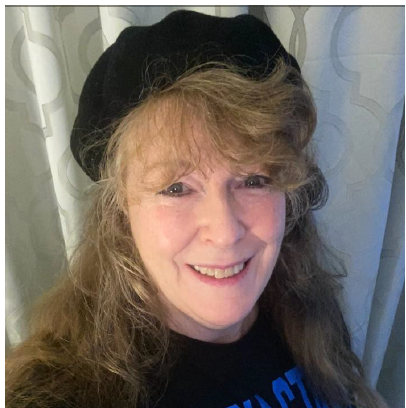
Dr. Michelle Kassorla, professor at Georgia State University's Perimeter College, named her Substack “The Academic Platypus” for a reason: "an English professor doing high tech is like an egg-laying mammal. It's very unlikely. Not impossible, but unlikely." That hybrid instinct—part literature scholar, part AI researcher—has made Michelle one of higher education's clearest voices on AI literacy and a great guest on Responsible AI from The AI Forum.
Michelle traces her AI awakening to November 30, 2022, the week ChatGPT launched and the week before finals. She'd already spotted the shift that summer, when a class of Chinese students suddenly started writing with startling fluency. Once GPT went public, colleagues who insisted the tool "could never write a paper about T.S. Eliot" watched her produce one on the spot. Standing in a hallway peppering a philosophy-professor friend with questions about knowledge and identity, Michelle hit what she now calls an existential jolt. Her response: "This is not going to defeat me. There has got to be something that it can't do." (The first crack in AI's armor, for the record, was MLA citations.)
That summer, Michelle and colleague Eugenia Novokshanova built what may be the first fully AI-integrated composition course, guided by what they call radical formative assessment: weekly Sunday meetings where student reflections and chat logs reshaped the curriculum in real time. An early idea to have AI proofread student essays flopped fast—it flattened student voice—so they pivoted to Socratic tutoring instead, banning the AI from writing a single sentence for the student. Michelle now builds her grading around proof of process: "I now will not do an AI tutor without having a chat log."
Michelle has a favorite historical parallel for this moment: the Luddites. Weaving looms didn't just automate cloth production, she points out—they built an entire fashion industry that hadn't existed before. She sees language headed the same way. "Up until that moment, every piece of writing in the history of the world was individually crafted by artisans," and English professors were the master weavers, training apprentices in the craft. Large language models are the industrial loom: "There was no manufactured language, but we're in the era of manufactured language." The disruption is real, but so is the precedent: "Every time we have a big technology that is super disruptive, like AI, it ends up creating new jobs that we had never even thought about."
Michelle also tells Alex about her inversion of Bloom's Taxonomy, the classic model for structuring curricula and learning objectives. Since AI already analyzes, evaluates, and creates on command, she flips the ladder: students start with an AI-generated essay, then evaluate, revise, apply, understand, and finally remember what they've learned—the one stage AI can't do for them. It's a shift she compares to lighting a candlelit dinner with fluorescent bulbs: "AI is the light. It's letting us see for the first time what we are doing and it's not good." Her advice for those fearful of AI traces back to a childhood encounter with red harvester ants: "If you're afraid of something, the only thing that you can do is learn more about it."
Topics
01:19 AI Literacy: A New Frontier in Education
05:50 The Existential Jolt of AI in Academia
10:37 Teaching Writing with AI: A New Approach
16:57 Radical Formative Assessment in AI Education
22:26 Learning from the Luddites: The Historical Context of AI and Writing
24:41 The Evolution of Artisan Work in the Age of AI
27:02 Understanding Human Uniqueness in Creative Work
31:03 Redefining Education: The Role of AI in Learning
36:22 Inverting Bloom's Taxonomy for Modern Education
41:01 Embracing Change: The Push-Pull Theory of Technology
45:29 Confronting Fears: Learning from the Red Harvester Ant
About Dr. Michelle Kassorla: Dr. Kassorla is a professor at Georgia State University, Perimeter College. She has been teaching with AI since Fall 2023 and has emerged as a thought leader in AI in Higher Education. She has served on the AI Expert Panel for EDUCAUSE and led their AI Literacy committee for Higher Education.
A recipient of a Center for Excellence in Teaching, Learning, and Online Education fellowship, she was recently featured in Grammarly’s 2025-26 “Teaching With AI: Trends, Tensions, and Transformation.” She's a Co-Principal Investigator in the "Perceptions of AI" study at Georgia State.
Learn more about Dr. Kassorla’s work on her Substack, The Academic Platypus.
Listen: Apple Podcasts | Spotify | YouTube | RSS